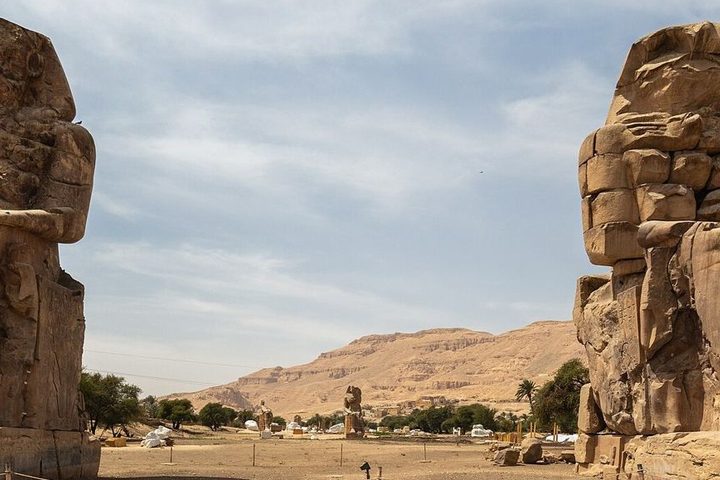
Colossi of Memnon
All that remains of a once-mighty mortuary temple
- ≈18 mheight of each statue
- 2seated statues of Amenhotep III
- 130 ADEmperor Hadrian came to hear them
- 10 minis enough for a stop
Why it matters
Two colossal statues of Amenhotep III, each standing about 18 meters tall, are all that remains visible above ground of his mortuary temple, which recent excavations revealed to have once been the largest mortuary temple ever built in Thebes — larger even than Karnak in its original footprint — before it was destroyed by floods and earthquakes over the centuries and its stone plundered for later temples. Ongoing excavations behind the statues have uncovered additional colossal statues of the lion-headed goddess Sekhmet, with more royal statue fragments still being unearthed from beneath the sand.
The statues were named 'Memnon' after a legendary Greek hero, after ancient Greeks noticed one of them emitted a strange moaning sound at sunrise, caused by a crack from an earthquake — a sound that stopped after Roman-era repairs. This strange phenomenon drew visitors from across the Roman Empire, including emperors such as Hadrian, who left Greek and Latin inscriptions and poems carved into the statues' bases recording their visits.
Plan your visit
| Hours | Open-air site, visible all day |
|---|---|
| Ticket | Free — no ticket needed |
| Photos | Free |
| Time | 10–15 minutes |
| Best time | Early morning light, on the way to the West Bank sites |
| Where | West Bank, on the main road to the Valley of the Kings |
Prices and hours checked October 2026. Always confirm at the ticket office. Card payment only at most ticket offices.
What to look for
- 1
The two giants
Amenhotep III sits on his throne, with his mother and his wife Tiye carved beside his legs.
- 2
The ‘singing’ statue
The northern colossus used to moan at sunrise after an earthquake crack — until Roman repairs.
- 3
Ancient graffiti
Greek and Latin poems left by Roman visitors are still carved on the legs.
- 4
The lost temple
Behind the statues, excavations are bringing back the largest temple ever built in Thebes.
Good to know
- Combine with the Ramesseum and Medinet Habu, both very close.
- Watch for traffic — the statues stand right by the road.
Hear the full story on the free audio guide
Free app, 11 languages, works offline — no signal needed inside the tombs and temples.